Category: MediaVault

Zimmermann Telegram

Zimmermann headline

In 1916 Woodrow Wilson won a second term as president, in part because he promised to keep America out of the growing war in Europe. Within months, Wilson—with the support of an overwhelming majority of Americans—would renege on that pledge.  In January 1917, British code-breakers deciphered a secret telegram sent to Mexico by German Foreign Minister, Arthur

Ronald Reagan: The Evil Empire Speech

Ronald Reagan Evil Empire Speech

Speaking at the National Association of Evangelicals convention in Orlando, Florida, President Reagan lowered the temperature in the Cold War several degrees when he branded the Soviet Union an “evil empire.” The term was coined by Reagan’s chief speechwriter Anthony Dolan and represented the rhetorical side of the escalation in the geopolitical conflict. President Ronald Reagan: Evil

Thomas Jefferson: Instructions for Meriwether Lewis, 1803

Thomas Jefferson

Even before consummating the Louisiana Purchase with France, President Jefferson laid plans to explore the region. In June 1803, he sent a letter to his personal secretary, Meriwether Lewis, who had recruited to lead the mission. The message lists many objectives for the expedition, but stresses economic, geopolitical, and scientific matters. Note in particular that the President

George Washington: Farewell Address

George Washington Signature

In early 1796, President George Washington decided not to seek election to a third term as United States president. Later that year, his 32-page farewell address appeared in Philadelphia’s American Daily Advertiser. The outgoing president Washington urged Americans to avoid excessive political party spirit, geographical distinctions, and entanglements with foreign nations—issues that resonate today. President George Washington: Farewell

Franklin Roosevelt: D-Day Prayer

FDR - D-Day Appointment

On the night of June 6, 1944, President Roosevelt delivered a national radio address to the nation on the Allied invasion of Western Europe. The date and timing of the amphibious landing—the opening of the  long-awaited second front—had been top secret. Now, he acknowledged “success thus far” and urged the people to “devote themselves in a continuance of

Franklin Roosevelt: Annual Message to Congress on the State of the Union, 1941

Franklin Roosevelt, Four Freedoms

In January 1941, as the German Army advanced through Europe, many Americans continued to believed the United States should stay out of the war. As he stepped to the lectern in the U.S. Capitol building, President Roosevelt understood Britain’s need for American support. What followed was an eloquent and urgent appeal for continued aid to Great

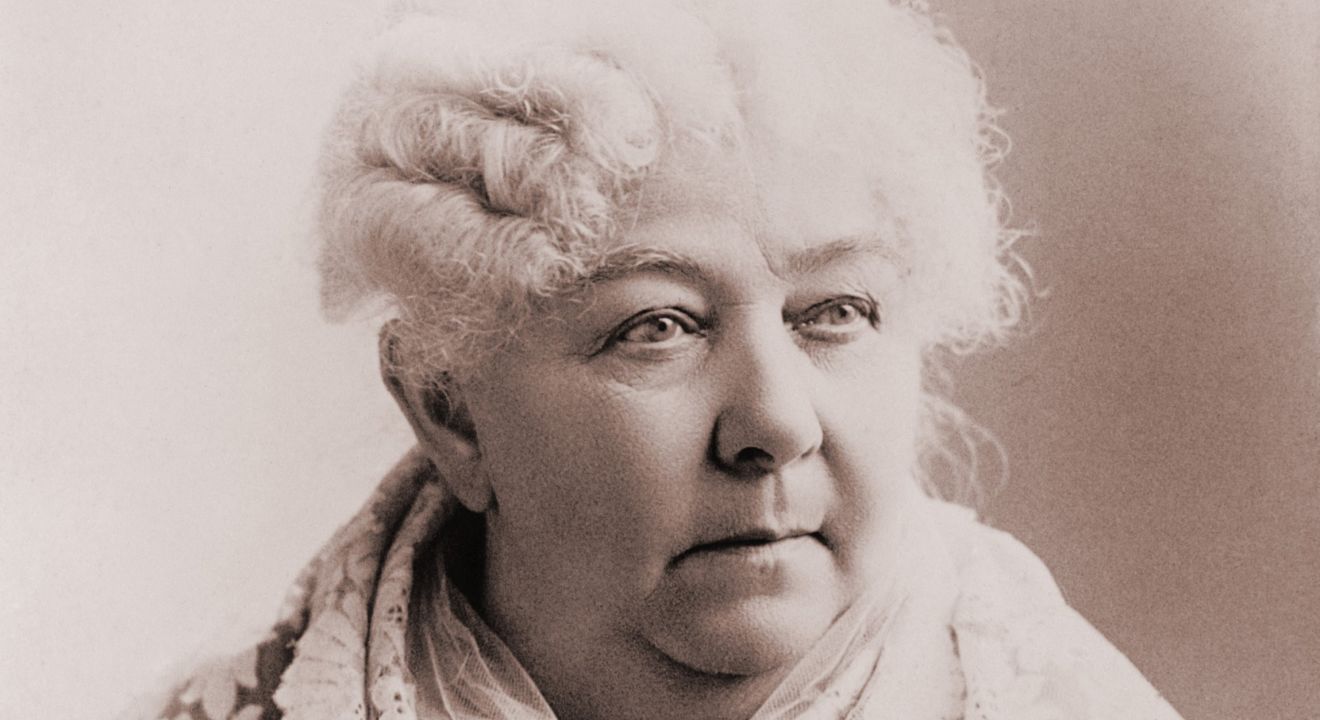
Elizabeth Cady Stanton: Solitude of Self

Elizabeth Cady Stanton

In February 1892, at the age of seventy‐six, Elizabeth Cady Stanton delivered this powerful and eloquent speech to the House Judiciary Committee. Later that evening, she delivered the same address before the members of the National American Woman Suffrage Association (NAWSA), the organization she led for twenty years. “The Solitude of Self” is widely considered

Articles of Confederation, 1777

Close-up of the top section of the Articles of Confederation showing ornate handwriting with the words "To all to whom."

The Articles of Confederation, drafted in 1777 and ratified in 1781, served as the first constitution of the United States of America. Created during the tumultuous years of the American Revolution, this document established a confederation of sovereign states while granting limited powers to a central government. While instrumental in guiding the fledgling nation through

Abraham Lincoln: Second Inaugural Address

Lincoln's Second Inaugural AddressLincoln's Second Inaugural Address

Lincoln’s second inaugural address is widely acknowledged as one of the most remarkable documents in American history. The London Spectator said of it, “We cannot read it without a renewed conviction that it is the noblest political document known to history, and should have for the nation and the statesmen he left behind him something

Abraham Lincoln: Gettysburg Address

Abraham Lincoln at Gettysburg

There are five known copies of the Gettysburg Address written in Lincoln’s own handwriting. Each version has slightly different text, and are named for the people who first received them: Nicolay, Hay, Everett, Bancroft and Bliss. Two copies apparently were written before delivering the speech; one of these was probably was the reading copy. Below, we